
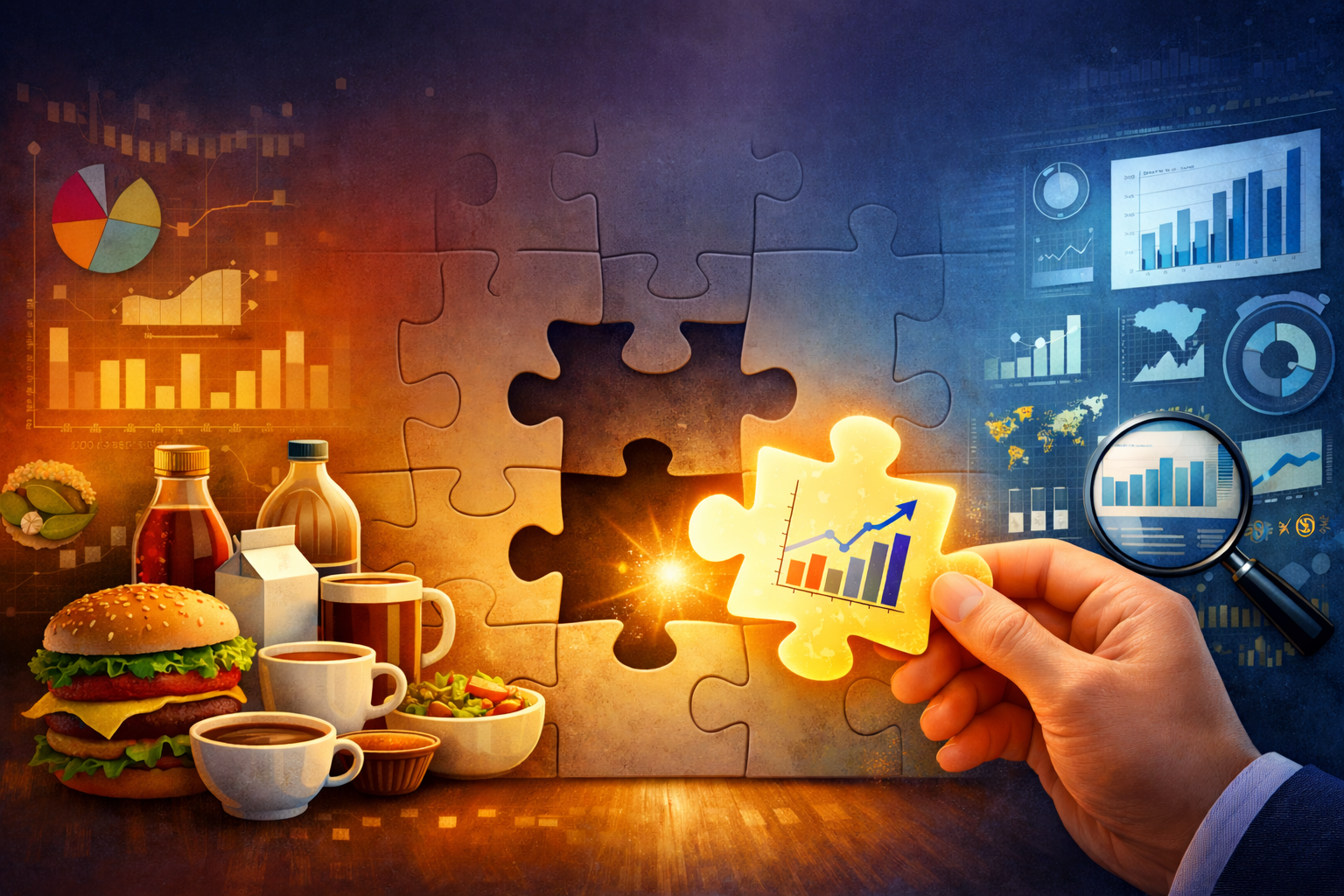
The Data Explosion in Foodservice: From Collection to Competitive Advantage
In today’s foodservice landscape, data is no longer a byproduct of operations — it has become a core strategic asset. Over the past two years, we have witnessed a significant acceleration in both the volume and granularity of data collected and analysed across the sector. What was once limited to basic sales tracking has evolved into a multi-layered ecosystem of insights, spanning performance, behaviour, and operational efficiency.
A Step Change in Data Volume
Recent reporting shows a substantial increase in the number of data points being captured on a monthly basis. The last 24 months, datasets have increased by 300% to thousands of structured entries per reporting cycle, covering multiple dimensions such as store type, product categories, cohort segmentation, and temporal trends.
This growth is not incremental — it is exponential. Where organisations previously relied on aggregated monthly figures, they are now working with highly detailed datasets that allow for slicing performance by concept, channel, and even specific consumption moments.
From Static Reporting to Dynamic Analysis
The real shift, however, is not just in the quantity of data, but in how it is used.
Modern reporting frameworks now integrate:
• Multi-table data structures linking operational and commercial metrics
• Cohort-based analysis to track behavioural patterns over time
• Cross-sectional views comparing store formats and food-led concepts
This enables stakeholders to move beyond retrospective reporting towards prescriptive insights.
The enrichment of pure consumption data with wheather information, social media trends and information allows today FMCG Producers to anticipate consumption trends and behaviour.